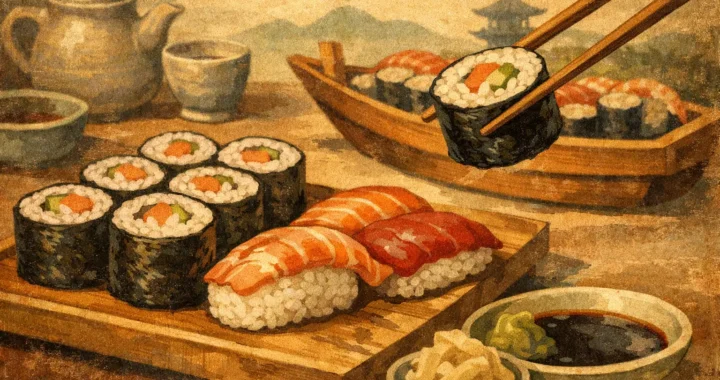
If you have ever stood in front of a sushi menu and wondered what does maki mean, you are not alone. It is one of the most common sushi terms people see, and also one of the easiest to understand once you know what to look for.
In simple terms, maki means rolled sushi. The word comes from the idea of wrapping or rolling, which is exactly how this style is made. A typical maki roll includes sushi rice and fillings wrapped in seaweed, then sliced into bite-sized pieces.
That sounds straightforward, but on a real menu, the details matter. Some maki rolls are simple and traditional. Others are bigger, packed with multiple ingredients, or topped with sauces. If you are new to sushi, knowing what maki means helps you order with a lot more confidence.
What does maki mean in Japanese food?
On a Japanese food menu, maki usually refers to sushi that has been rolled with rice, fillings, and nori, which is dried seaweed. After the roll is formed, it is cut into pieces and served as the round slices most people picture when they think of sushi.
This is different from sushi as a broad category. Sushi does not automatically mean raw fish, and it does not always mean a roll. The defining part of sushi is the seasoned rice. Maki is one style within that larger category.
That distinction helps because many guests use the word sushi to mean every item in the sushi section. In practice, there are important differences between maki, nigiri, and sashimi. They may use similar ingredients, but the format changes the experience.
How maki is made
Maki starts with a sheet of nori laid flat, usually on a bamboo mat. Sushi rice is spread over the nori, fillings are added, and the whole thing is rolled into a cylinder. Once rolled, it is sliced into even pieces.
The fillings can be very simple, like cucumber or tuna, or more layered, with crab, avocado, tempura shrimp, cream cheese, spicy mayo, or eel sauce. That range is one reason maki is so popular. It gives people a familiar, easy-to-eat format with plenty of room for variety.
For beginners, maki often feels more approachable than other sushi styles because each piece contains a balanced mix of rice, filling, and seaweed. You are not getting a single bite of fish on its own. You are getting a combination of textures and flavors in each piece.
Maki vs. nigiri vs. sashimi
If you are trying to read a sushi menu quickly, this is the comparison that matters most.
Maki is rolled sushi. It is cut into pieces and usually includes rice, nori, and one or more fillings.
Nigiri is a hand-formed piece of sushi rice topped with a slice of fish or another ingredient. It is not rolled. There is usually no seaweed wrapping the whole piece, though some styles use a thin strip of nori to hold toppings in place.
Sashimi is sliced fish served without sushi rice. It is the simplest format and often the most direct expression of the fish itself.
None of these is automatically better than the others. It depends on what you want. If you like clean, simple bites, nigiri and sashimi may appeal to you. If you want something easier to start with, maki is often the safer choice because the flavors are more blended and familiar.
Different types of maki
Not every maki roll looks the same. If you see several kinds of rolls on a menu, that does not mean the term is being used loosely. There are real style differences.
Hosomaki is a thinner roll, usually made with one main filling. Cucumber rolls, tuna rolls, and avocado rolls often fall into this category. These are straightforward and traditional.
Futomaki is a thicker roll with multiple fillings. Because it is larger, each slice tends to have more texture and more going on in a single bite.
Uramaki is an inside-out roll, where the rice is on the outside and the nori is inside. This is a very common style in American sushi restaurants. California rolls are a classic example.
Temaki is technically a hand roll rather than a sliced roll. It is cone-shaped and meant to be eaten as one piece. Some people group it with maki because it is still rolled, but on a menu it is usually listed separately.
So when someone asks what does maki mean, the short answer is rolled sushi. The longer answer is that it includes a few different formats, from simple slim rolls to larger specialty rolls.
Why maki is often the best starting point
For people who are new to sushi, maki is usually the easiest place to begin. The size is manageable, the ingredients are visible, and the flavor combinations can be as familiar or adventurous as you want.
A cucumber roll or California roll is a low-pressure first order. If you already know you like cooked seafood, a shrimp tempura roll is another easy option. If you want something richer, spicy tuna or salmon rolls can be a good next step.
This is also why maki works well for mixed groups. One person might want something simple, another wants a baked roll, and someone else wants a spicy specialty roll. Everyone is still ordering within a format that feels easy to share.
What maki does and does not tell you
The word maki tells you the food is rolled. It does not tell you whether the roll is raw or cooked, spicy or mild, traditional or heavily customized.
That is where menu descriptions matter. A tuna roll and a tempura shrimp roll are both maki, but they are very different meals. One is lighter and more traditional. The other is warmer, crispier, and often more filling.
Sauces also make a big difference. Some maki rolls are very clean and simple. Others come topped with spicy mayo, eel sauce, crunchy flakes, or extra fish. If you prefer a lighter bite, stick to simpler rolls. If you want something bold and satisfying, specialty rolls may be a better fit.
Common ingredients you will see in maki
Most maki rolls are built from a few basic parts: sushi rice, nori, protein or vegetables, and sometimes sauces or toppings.
Common seafood fillings include tuna, salmon, crab, shrimp, and eel. Vegetable options often include cucumber, avocado, asparagus, or pickled radish. In American-style sushi, you may also see cream cheese, tempura flakes, jalapeno, or baked toppings.
That blend of Japanese tradition and American preference is normal. Sushi menus in the US often include both classic rolls and more creative house rolls. Neither style cancels out the other. They simply serve different tastes.
How to order maki with confidence
If you are ordering for the first time, focus on three things: whether you want raw or cooked ingredients, whether you want something simple or loaded, and how hungry you are.
A basic roll is a good choice if you want a lighter meal or plan to add nigiri, soup, or an appetizer. A larger specialty roll makes more sense if you want your roll to be the main event.
It also helps to ask practical questions. Is the roll spicy? Does it have raw fish? Is it fried or baked? A good sushi menu should make this clearer, but when it does not, asking saves you from ordering something that misses the mark.
At a casual neighborhood spot like O’Sae Colorado, maki usually appeals to both regular sushi fans and guests who are still figuring out what they like. That flexibility is part of the appeal.
So, what does maki mean for your next meal?
It means rolled sushi, but more than that, it usually means options. Maki can be simple, filling, cooked, raw, mild, spicy, traditional, or more Americanized depending on the ingredients and style.
If you are new to Japanese food, maki is one of the easiest ways to get comfortable with sushi. If you already know your way around a menu, it is still one of the most versatile choices you can make. Either way, once you know what the word means, the menu gets a lot easier to read.
Next time you see maki listed, you do not need to guess. Just look at the ingredients, choose the flavor profile that sounds right, and order the roll that fits your appetite.