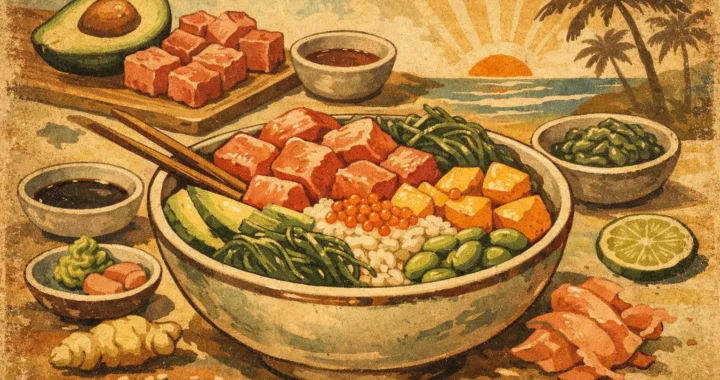
If you have ever looked at a menu and wondered what comes in a poke bowl, you are not alone. Poke is one of those meals that looks simple at first glance, but the details matter. One bowl can be light and fresh, another can be rich and filling, and both can still be called poke.
That is why it helps to know the basic parts. Once you understand how a poke bowl is built, ordering gets easier. You can tell what sounds good, what feels too heavy, and what works best if you are trying poke for the first time.
What comes in a poke bowl most often
Most poke bowls are built in layers. You usually start with a base, add a protein, then finish with toppings and sauce. Some places keep it very traditional, while others lean into a more customizable, casual bowl style.
The usual base is rice. Sushi rice is the most common because it has the soft, slightly sticky texture that works well with marinated fish and toppings. Brown rice is also popular if you want something heartier. Some poke bowls use greens instead of rice, or a mix of rice and salad, which gives the bowl a lighter feel.
The protein is the center of the bowl. Classic poke often uses raw fish, especially tuna or salmon. Those are still the most familiar choices for many customers. Depending on the restaurant, you might also see cooked shrimp, crab, tofu, chicken, or other proteins. This part changes the bowl the most. Tuna tends to be clean and meaty, salmon is richer, and cooked options are often the easiest entry point for beginners.
After that come the toppings. This is where flavor and texture really start to build. Common toppings include cucumber, avocado, edamame, seaweed salad, green onion, sweet onion, shredded carrots, radish, corn, masago, sesame seeds, and crispy onions. Some bowls stay simple with just a few toppings. Others go bigger and aim for contrast in every bite.
Sauce usually ties everything together. Soy-based sauces are common, but so are spicy mayo, sesame dressing, ponzu, and eel sauce. A good sauce should add flavor without taking over the whole bowl. If you like cleaner flavors, a lighter sauce may be better. If you want something richer and more familiar, creamy spicy sauces tend to be a safe choice.
The base of a poke bowl
Rice is still the standard for a reason. It makes the meal more filling, balances salty and savory flavors, and gives the bowl structure. White sushi rice is especially common because it complements seafood without competing with it.
If you choose brown rice, expect a nuttier flavor and firmer bite. That can be a good match if you want something a little heavier or more substantial for lunch or dinner. Salad greens create a fresher bowl, but they also change the overall experience. A greens-based poke bowl can feel more like a salad with poke on top than a traditional rice bowl.
There is no single right choice here. It depends on whether you want comfort, freshness, or something in between.
What protein comes in a poke bowl
When people picture poke, they usually think of cubed raw fish. That is still the most recognizable version. Tuna is classic because it is firm, clean-tasting, and holds marinade well. Salmon is another favorite because it has a softer texture and richer flavor.
If raw fish is new to you, cooked proteins can make poke easier to try. Shrimp, imitation crab, or other cooked seafood options still give you the bowl format without asking you to jump straight into sashimi-style textures. Tofu is also common for guests who want a meat-free option.
This is where personal preference matters most. If you already enjoy sushi or sashimi, raw tuna or salmon will probably feel familiar. If you prefer fully cooked meals, there is nothing wrong with starting there. A poke bowl should feel approachable, not like a test.
The toppings that make a poke bowl feel complete
Toppings are not just extras. They are what keep the bowl from tasting flat. A good poke bowl usually balances cool, creamy, crisp, salty, and sometimes a little heat.
Cucumber adds crunch and freshness. Avocado brings a softer, richer texture. Edamame adds substance and a mild, slightly sweet flavor. Seaweed salad gives the bowl a briny, savory note that works especially well with seafood. Green onion and sweet onion add sharpness, while carrots and radish give the bowl a crisp bite.
Then there are toppings that add a little pop or finish. Sesame seeds are common. Masago can add saltiness and texture. Crispy onions or tempura flakes bring crunch, which can make the whole bowl more satisfying.
Not every poke bowl needs every topping. In fact, too many can make the bowl feel crowded. The best bowls usually have enough contrast to stay interesting without losing the flavor of the protein.
What sauce comes in a poke bowl
Sauce is often what makes one poke bowl taste completely different from another. A soy-based marinade gives a bowl a more savory, traditional direction. Ponzu adds brightness and a citrusy edge. Sesame-based sauces can feel nutty and mellow.
If you like stronger flavor, spicy mayo is one of the most common choices. It adds creaminess and heat, and it tends to make poke more approachable for people who like rolls with spicy sauce. Eel sauce is sweeter and thicker, so it can make the bowl feel richer.
There is a trade-off here. Heavier sauces can be delicious, but they can also cover up the taste of the fish and fresh toppings. Lighter sauces let the ingredients stand out more. If you are ordering poke for the first time, a medium-flavor sauce is usually a good middle ground.
Traditional poke vs modern poke bowls
This is where some confusion comes in. Traditional poke and the poke bowls many people order today are related, but they are not exactly the same thing.
Traditional poke comes from Hawaii and often focuses more simply on seasoned fish. The fish itself is the star, usually dressed with ingredients like soy sauce, sesame oil, seaweed, onion, or similar seasonings. It may be served without the fully loaded bowl format that has become popular in many casual restaurants.
Modern poke bowls are often built more like a customizable rice bowl. They still feature marinated fish or seafood, but they also include a wider range of toppings, sauces, and bases. That makes them flexible and easy to personalize, especially for groups with different tastes.
Neither version is automatically better. One is more minimalist and fish-forward. The other is more varied and filling. What you prefer depends on whether you want a cleaner seafood experience or a balanced, all-in-one meal.
What comes in a poke bowl if you are a beginner
If you are new to poke, the easiest bowl is usually one with familiar ingredients and a moderate sauce. Start with rice, choose a protein you already know you like, then add a few simple toppings such as cucumber, avocado, and edamame.
For sauce, it helps to avoid going too extreme at first. Very spicy or very sweet sauces can dominate the bowl. A soy-based or lightly spicy sauce is often easier to read on your first try. You can always branch out later.
A lot of beginners do best with a bowl that has only a few toppings instead of every available add-on. More is not always better. If the bowl has too many competing flavors, it becomes harder to tell what you actually enjoy.
At a casual spot with a broad menu, poke can be one of the easier ways to try something new without committing to a fully traditional sushi experience. That is part of why it works so well for mixed groups, especially when some people want sushi, some want a rice bowl, and others just want something fresh and filling.
How to tell if a poke bowl will be light or filling
The base and sauce usually decide that. Rice, avocado, creamy sauces, and crunchy fried toppings make a poke bowl more substantial. Greens, lighter sauce, and simpler toppings make it feel fresher and lighter.
Protein also plays a role, but less than people think. Tuna with rice and spicy mayo can feel heavier than salmon on greens with ponzu, even though salmon is the richer fish. It is really the whole combination that matters.
If you are ordering lunch, you may want a bowl that does not feel too heavy in the middle of the day. For dinner, a heartier bowl with rice and richer toppings can be more satisfying. There is no wrong answer. It just helps to know what kind of meal you are actually building.
If you are still unsure what comes in a poke bowl, think of it as a choose-your-balance meal: base, protein, texture, and sauce. Once you know those four parts, the menu starts to make a lot more sense, and ordering gets a lot more enjoyable.