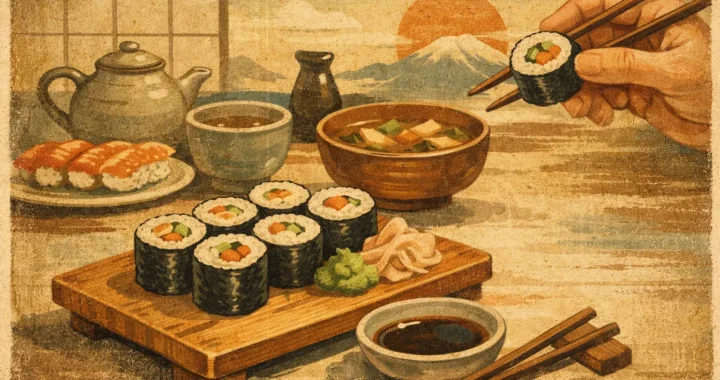
If you have ever looked at a sushi menu and felt sure about ramen but less sure about sushi, a maki roll is usually the easiest place to start. It is familiar, easy to share, and simple to eat, which makes it a good fit for first-timers and regular sushi fans alike.
Maki is one of the most recognizable sushi styles in the U.S. You will often see it listed alongside nigiri and sashimi, but it serves a different purpose on the table. Nigiri highlights a slice of fish over rice. Sashimi skips the rice entirely. A maki roll brings several ingredients together in one bite, which can make it feel more approachable if you want a balance of flavor and texture rather than a single ingredient taking center stage.
What Is a Maki Roll?
A maki roll is sushi rice and fillings rolled in seaweed, then sliced into bite-size pieces. The outer layer is usually nori, the dark sheet of roasted seaweed that holds everything together. Inside, you might find seafood, vegetables, egg, or a mix of ingredients chosen for contrast and balance.
That balance is part of why maki is so popular. You get rice, texture, and flavor in a format that is neat, consistent, and easy to order for the table. For beginners, that can be less intimidating than choosing raw fish on its own. For experienced sushi diners, it offers room for variety, from simple cucumber rolls to more layered combinations with tuna, salmon, crab, avocado, or spicy sauces.
The word itself can cover a range of roll styles. Some are thin and minimal. Others are larger and built with more ingredients. On many restaurant menus, maki refers broadly to rolled sushi, even when there are small differences in style.
Why Maki Roll Is a Popular First Sushi Order
A lot of people try sushi for the first time through a roll, and that makes sense. A maki roll is portioned in a way that feels familiar. You can eat one piece at a time, share an order, and figure out what you like without committing to a single strong flavor.
It also works well for mixed groups. One person may want something simple like cucumber or avocado, while someone else wants a spicy tuna roll or a roll with multiple textures. That flexibility matters when you are ordering lunch with coworkers, dinner with family, or takeout for a group where not everyone likes the same things.
Another reason is texture. A good roll gives you soft rice, a slight bite from the nori, and a crisp or creamy filling. That combination can make sushi feel more accessible than people expect. If someone says they are curious about sushi but do not know where to begin, a maki roll is often the easiest answer.
Common Types of Maki Roll
Not every roll is built the same way, and the differences matter when you order. Hosomaki is a thinner roll with fewer ingredients, often just one main filling like tuna, cucumber, or pickled radish. It is clean, simple, and a good choice if you want something traditional.
Futomaki is thicker and usually includes several fillings. It can feel more substantial, especially if you are looking for something closer to a full meal rather than a side order. Then there are inside-out rolls, often called uramaki, where the rice is on the outside and the nori is inside. These are especially common in American sushi restaurants and often appeal to beginners because the seaweed flavor is less forward.
There is no single best style for everyone. If you want something light and straightforward, a thinner roll is usually the right call. If you want more texture and a bigger range of flavors in each bite, a larger roll may be the better choice.
How to Choose the Right Maki Roll
The easiest way to choose is to think about what you already like. If you enjoy fresh, clean flavors, look for rolls with cucumber, tuna, salmon, or avocado. If you prefer richer food, crab-based rolls, spicy mayo, eel sauce, or tempura-style ingredients may be more your speed.
It also helps to decide how adventurous you want to be. Some people are ready for raw fish right away. Others want cooked seafood or vegetable-forward rolls first. Neither approach is more correct. The best first order is the one you will actually enjoy.
For beginners, rolls with cooked shrimp, imitation crab, cucumber, avocado, or egg tend to feel familiar. If you already know you like sushi-grade fish, tuna and salmon rolls are natural next steps. Spice is another variable. A spicy roll can be fun, but if you are new to sushi, starting mild lets you notice the texture and ingredients more clearly.
A practical way to order is to mix one safe choice with one new choice. That gives you something dependable on the table and still leaves room to branch out.
Maki Roll vs. Nigiri and Sashimi
People often compare these three because they sit side by side on the menu, but they offer different experiences. A maki roll is about combination. Nigiri is about focus. Sashimi is about purity.
If you want a bite that blends rice, seaweed, and filling, maki is the better fit. If you want to taste one fish more directly, nigiri is a smarter order. If you want no rice and the cleanest possible fish flavor, sashimi is the choice.
That said, it does not have to be either-or. A lot of diners order a roll plus one or two pieces of nigiri. That is often the sweet spot if you want variety without overthinking it. You get the easy familiarity of a roll and the chance to try a more traditional sushi format at the same time.
What Makes a Good Maki Roll
A good roll should hold together without feeling packed too tightly. The rice should be seasoned but not overly sweet. The nori should taste fresh, not stale or chewy. Most of all, the ingredients should make sense together.
That sounds basic, but balance is the whole point. Too much rice can make a roll feel heavy. Too much sauce can bury the filling. An overloaded roll may look impressive but can be harder to eat and less satisfying bite to bite.
This is where menu design matters. A well-built sushi menu gives room to both simple rolls and more layered specialty rolls. Some guests want something classic and clean. Others want crunch, spice, and sauce. A good neighborhood spot should be able to do both without making the menu feel confusing.
Best Times to Order a Maki Roll
A maki roll works in more situations than people think. It is an easy lunch because it is filling without always feeling heavy. It fits dinner when you want to build a meal with appetizers, soup, or noodles. It also works well for takeout because rolls generally travel better than some delicate sushi formats.
For groups, rolls are especially practical. They are shareable, easy to portion, and usually broad enough in flavor to satisfy different preferences. If one person wants sushi and another wants a rice bowl, ramen, or an appetizer, a casual Asian restaurant with a wide menu can solve that problem without making anyone settle.
That is part of why maki continues to be a go-to order. It fits both the sushi fan who knows exactly what they want and the person who just wants something reliable and good.
Ordering Maki Roll With Confidence
The best approach is not to memorize sushi terms. It is to know your comfort level. If you like cooked seafood, start there. If you enjoy raw fish, go for a tuna or salmon roll. If you want something lighter, choose cucumber or avocado. If you want a fuller meal, pair your roll with soup, noodles, or a rice dish.
At O’Sae Colorado, that flexibility matters because not every table is ordering the same way. Some guests want sushi only. Others want a mix of sushi, ramen, poke, or appetizers. A maki roll fits easily into all of those plans, which makes it one of the most useful things on the menu.
If you are still unsure, keep it simple. Start with one roll that sounds familiar, pay attention to what you liked, and build from there. The next order gets easier, and that is usually how sushi becomes part of your regular rotation.
A maki roll does not ask you to be an expert. It just gives you a solid place to start and plenty of room to find your favorites.