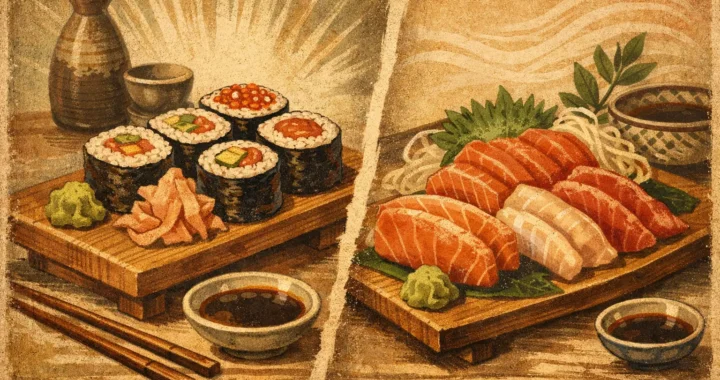
When a table is deciding between ramen, poke, and sushi, the sushi choice can still bring up one question: sushi rolls versus sashimi. Both can feature fish and familiar Japanese flavors, but they offer very different eating experiences. One is built for variety and a satisfying bite. The other keeps the focus squarely on the seafood.
Knowing the difference makes ordering easier, whether you are trying sushi for the first time, choosing a lighter lunch, or putting together a dinner where everyone wants something different.
What Is the Difference Between Sushi Rolls and Sashimi?
The simplest distinction is rice. Sushi is made with seasoned vinegar rice, while sashimi is usually thinly sliced raw fish or seafood served without rice. That means sashimi is not technically sushi, even though both often appear together on a sushi menu.
Sushi rolls, also called maki, wrap sushi rice and fillings in seaweed or another outer layer. Fillings can include raw fish, cooked shrimp, crab-style seafood, eel, vegetables, avocado, cucumber, cream cheese, or spicy sauces. A roll is cut into bite-size pieces, so it is easy to share and gives you several flavors in every piece.
Sashimi is more straightforward. It may be salmon, tuna, yellowtail, shrimp, octopus, or another seafood selection, cut to show its texture and flavor. It is typically served with soy sauce, wasabi, ginger, and garnishes such as daikon radish. The fish does the talking, so quality, freshness, and proper preparation matter a great deal.
Where Does Nigiri Fit In?
Nigiri is the useful middle ground. It is a small hand-formed piece of sushi rice topped with fish or seafood. If sashimi sounds appealing but you still want a little rice, nigiri is often the best place to start. It also lets you taste one type of fish at a time without the added flavors of a full roll.
Flavor and Texture: What to Expect
A sushi roll is usually the more layered option. The rice has a mild tang from vinegar seasoning, nori adds a savory note, and fillings can range from crisp cucumber to rich avocado to spicy tuna. Sauces, sesame seeds, tempura crunch, and tobiko can add even more flavor and texture.
That variety is exactly why rolls work well for beginners and groups. A California-style roll can feel familiar and mild. A spicy tuna roll brings heat. A tempura roll may appeal to someone who prefers cooked seafood and a crispy texture. There is no single sushi-roll experience because the fillings change everything.
Sashimi is cleaner and more direct. Salmon sashimi is often buttery and rich, while tuna tends to be leaner and more savory. Yellowtail can be silky with a fuller flavor. Since there is no rice or sauce to soften the seafood, sashimi is usually best for diners who enjoy the natural taste and texture of fish.
Neither choice is automatically better. It depends on what sounds good that day. If you want contrast, crunch, and a filling meal, rolls are a natural choice. If you want to slow down and taste the seafood itself, sashimi is hard to beat.
Sushi Rolls Versus Sashimi: Which Is More Filling?
Sushi rolls are generally more filling because rice is a main component. A standard roll often includes several pieces, plus fillings and sometimes sauces or fried elements. That makes rolls a practical choice for lunch, dinner, or sharing with the table.
Sashimi is lighter in the sense that it does not include rice, but portion size still matters. Fish contains protein and healthy fats, especially varieties such as salmon, so a sashimi plate can be satisfying. Still, someone with a larger appetite may want to pair it with miso soup, edamame, a small rice bowl, salad, or noodles.
If you are looking for a balanced order, a few pieces of sashimi plus nigiri or a simple roll gives you both the clean flavor of the fish and the comfort of seasoned rice. This is also a good approach when two people have different preferences.
Nutrition Depends on the Ingredients
It is easy to assume sashimi is always the lighter choice and rolls are always the heavier one. Often that is true, but not always. Sashimi has no rice and usually no added sauce, so it can be a good choice for diners who want more protein and fewer carbohydrates. Its nutrition profile mainly depends on the type and amount of fish.
Rolls vary widely. A cucumber or tuna roll can be fairly simple, while a large specialty roll with tempura, spicy mayo, eel sauce, and cream cheese can be much richer. Rice also contributes carbohydrates, and soy sauce can add significant sodium if used heavily.
There is no need to treat either option as a rulebook. If you want a lighter order, choose sashimi, nigiri, or a simple roll and use sauces on the side when available. If you want a hearty, comfort-food meal, a specialty roll can be exactly the right call. The best choice is one that fits your appetite rather than one that follows a food trend.
How to Order if You Are New to Sushi
Starting with sashimi can feel like a big leap if you do not already enjoy raw seafood. A beginner-friendly roll is often more approachable because the rice and other ingredients round out the flavor. Cooked shrimp, crab-style seafood, avocado, cucumber, and tempura options can offer a familiar entry point.
If you are curious about raw fish, try a simple salmon or tuna roll before ordering a full sashimi plate. Nigiri is another easy next step because it introduces the fish in a simple format while still including rice. From there, sashimi becomes less intimidating because you already know which fish you like.
For experienced sushi fans, sashimi is a chance to compare different seafood selections side by side. Order a variety rather than several pieces of one fish if you want to notice the differences in richness, texture, and flavor. A simple roll on the side can add variety without taking attention away from the fish.
A Few Practical Ordering Tips
Raw seafood is not the only sushi option. Many rolls include cooked ingredients, and vegetarian rolls can be just as satisfying. If you are pregnant, have a weakened immune system, or have been advised to avoid raw seafood, choose cooked menu options and ask the restaurant staff for guidance.
Allergies deserve the same care. Sushi can include fish, shellfish, sesame, soy, wheat, and egg, while sauces may contain ingredients that are not obvious from the name. Let your server know about allergies before ordering rather than trying to guess from appearance.
When eating sashimi, use soy sauce lightly. Dipping the fish can add flavor, but soaking it can cover the delicate taste you ordered it for. With nigiri, a light touch of soy sauce on the fish side, rather than the rice, helps keep the piece together.
Choosing for a Group Meal
For a group with mixed tastes, ordering only sashimi can leave some people wanting something more familiar or filling. Ordering only rich specialty rolls can leave seafood fans wishing for a simpler bite. A mix usually works best: choose a few rolls with different flavor profiles, add sashimi or nigiri for the traditional sushi lovers, and include an appetizer or warm dish for anyone skipping raw seafood.
That flexibility is part of what makes a casual sushi meal easy to share. At O’Sae Colorado, a group can pair sushi choices with ramen, rice bowls, poke, or other Asian comfort dishes, so no one has to order outside their comfort zone.
The next time the menu puts sushi rolls and sashimi side by side, order for the experience you want: a colorful, filling mix of flavors, or a simple plate that lets great seafood stand on its own.