If you have ever looked at a sushi menu and paused at nigiri and sashimi, you are not alone. The difference between nigiri and sashimi is simple once you know what to look for, and getting it right makes ordering a lot easier – especially if you are trying sushi for the first time or ordering for a group with mixed tastes.
Some people use the two terms like they mean the same thing. They do not. Both can feature high-quality raw fish, and both are common on Japanese menus, but they are prepared and served differently. That difference affects flavor, texture, portion size, and how filling the dish feels.
What is the difference between nigiri and sashimi?
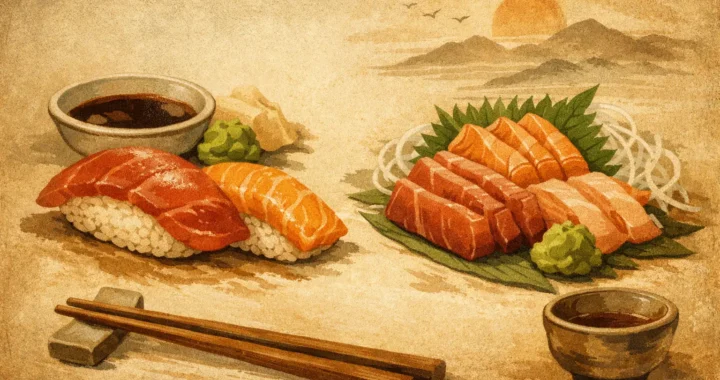
The clearest difference is rice. Nigiri is a small hand-pressed piece of sushi rice topped with a slice of fish or seafood. Sashimi is just the sliced fish or seafood by itself, with no rice underneath.
That means nigiri is a type of sushi, while sashimi is not technically sushi in the usual sense because it does not include vinegared rice. If you are ordering based on appetite, nigiri usually feels more substantial because of the rice. Sashimi is lighter, more direct, and more focused on the seafood itself.
This is where menu confusion usually starts. If someone says they want sushi but they mainly want pieces of fish without rice, what they actually want may be sashimi. If they want something classic, balanced, and easy to eat piece by piece, nigiri is often the better fit.
How nigiri is made
Nigiri starts with sushi rice that has been seasoned with vinegar. A chef shapes a small oval of rice by hand, then places a slice of fish or seafood over the top. Sometimes there is a tiny amount of wasabi between the rice and the topping. In some cases, a thin strip of seaweed is used to hold everything together, especially for softer toppings.
The important part is balance. A good piece of nigiri is not a big lump of rice with fish sitting on top. It should be proportioned so that the rice supports the topping without overpowering it. You get a mix of texture in one bite – soft rice, clean seafood flavor, and sometimes a little heat from wasabi.
Common nigiri toppings include tuna, salmon, yellowtail, shrimp, eel, and egg. Some are served raw, while others are cooked. That makes nigiri a good choice for beginners who want options beyond raw fish.
How sashimi is served
Sashimi is more straightforward. It is sliced fish or seafood served on its own, usually arranged neatly and accompanied by garnishes like shredded daikon, wasabi, and ginger. The focus is on the cut, freshness, and natural flavor of the seafood.
Because there is no rice, sashimi tends to feel cleaner and more concentrated. You notice the texture more. Fatty salmon, lean tuna, tender yellowtail, or sweet scallop each stand out in a different way when there is nothing underneath them.
That simplicity is exactly why some people love sashimi and why others find nigiri more approachable. If you are new to sushi, sashimi can feel like a bigger jump because there is no rice to soften the experience. If you already enjoy seafood and want to taste it more directly, sashimi is usually the better order.
Nigiri vs sashimi on flavor and texture
When people ask about the difference between nigiri and sashimi, they are often really asking what each one tastes like. The answer depends partly on the fish, but the rice changes the experience more than many people expect.
Nigiri gives you contrast. The slightly seasoned rice adds mild sweetness and acidity, which can round out richer fish and make each bite feel balanced. That is one reason nigiri often feels easier for beginners. The rice acts as a familiar base.
Sashimi is more intense in a good way. Since it is only the fish or seafood, every detail stands out – texture, temperature, fat content, and freshness. That can be great if you know what you like. It can also make different cuts more noticeable. A buttery piece of salmon sashimi and a firmer slice of tuna sashimi are clearly distinct in a way some diners appreciate right away.
Neither is better across the board. It depends on whether you want a complete bite with rice or a more direct seafood experience.
Which one is more filling?
Nigiri is usually more filling because it includes rice. If you are ordering lunch, grabbing a quick dinner, or trying to build a meal that keeps you satisfied, nigiri often makes more sense than sashimi alone.
Sashimi is lighter but not necessarily a smaller flavor experience. It just does not have the same built-in starch. Some diners prefer sashimi when they want something protein-forward or when they are pairing it with other dishes like soup, salad, poke, or an appetizer.
For groups, this matters. Someone who wants a full meal may be happiest with nigiri or a mix of sushi items. Someone who wants to sample fish without too much rice may lean toward sashimi. If you are ordering for a table with different comfort levels, getting both is often the easiest move.
Which is better for beginners?
For most beginners, nigiri is the easier starting point. It is familiar in structure, easier to portion mentally, and less intimidating than a plate of fish by itself. The rice gives each piece a softer landing if you are still figuring out what kinds of seafood you like.
That said, sashimi is not only for experts. If you already enjoy raw oysters, ceviche, or high-quality seafood in general, sashimi may feel natural. The main thing is expectations. Do not order sashimi expecting a rice-based sushi bite, and do not order nigiri expecting fish only.
At a casual neighborhood restaurant, this is where clear menu choices matter. A beginner might start with nigiri, a roll, or a cooked option like shrimp or eel. A more experienced diner might add sashimi for variety. At O’Sae Colorado, that kind of mix works well because one group can order across comfort levels without making the meal complicated.
How to order without second-guessing yourself
If you are deciding between the two, think about what kind of meal you want instead of focusing only on the terminology.
Choose nigiri if you want a traditional sushi option with rice, a more filling plate, or an easier entry point. Choose sashimi if you want to focus on the seafood itself, skip rice, or add a lighter dish to the table.
You can also order both. That is often the best call when you are sharing. Nigiri gives structure and variety, while sashimi lets everyone taste the fish in a more direct way. If your table also includes people who would rather have ramen, bowls, or appetizers, that kind of flexibility keeps everyone happy.
Common misconceptions about nigiri and sashimi
One common misconception is that sashimi is just a fancy word for sushi. It is not. Sushi usually refers to dishes built around seasoned rice. Sashimi stands apart because it does not include rice.
Another misconception is that both are always raw. Many sashimi selections are raw, and many nigiri toppings are raw, but not always. Shrimp can be cooked. Eel is commonly cooked. Egg nigiri is obviously not raw fish at all. So if your concern is raw seafood specifically, it is worth checking the actual item, not just the category.
People also assume sashimi is always the more advanced or expensive choice. Sometimes it is, but not as a rule. It depends on the fish, portion size, and restaurant. Nigiri can be just as high quality and just as skill-dependent.
The easiest way to remember it
If you want a quick shortcut, remember it this way: nigiri is fish on rice, sashimi is fish without rice.
That is the core distinction, and it clears up most menu confusion right away. From there, your choice comes down to appetite, comfort level, and what kind of experience you want from the meal.
If you are still unsure when ordering, go with what sounds good rather than what sounds impressive. The best choice is the one you will actually enjoy, and once you know the difference, the menu gets a lot more straightforward.