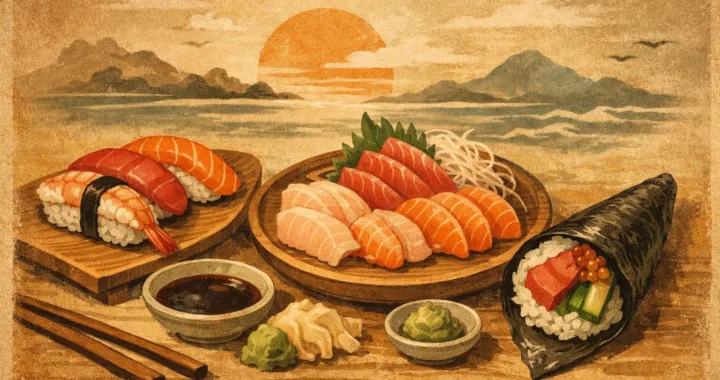
Standing at a sushi menu and trying to sort out nigiri sashimi temaki is a lot more common than most people admit. One person wants something familiar, another wants the freshest raw fish option, and someone else just wants an easy handheld roll that does not feel intimidating. Knowing the difference makes ordering faster, easier, and a lot more enjoyable.
If you are new to sushi, these three terms matter because they describe completely different eating experiences. If you already know your way around a sushi bar, they still help you order more intentionally. Texture, portion size, rice level, and even how filling your meal feels can change a lot depending on whether you choose nigiri, sashimi, or temaki.
Nigiri sashimi temaki: what each one means
Nigiri is a small hand-pressed piece of sushi rice topped with fish or another protein. It is simple, compact, and usually served in pairs. The rice is part of the point here, not just a base. A good piece of nigiri balances the seasoning of the rice with the texture and flavor of the topping.
Sashimi is sliced raw fish, served without rice. It is the most direct way to taste the fish itself. Because there is no rice, no seaweed wrap, and usually very little added on top, sashimi tends to appeal to people who want a cleaner, more focused bite.
Temaki is a hand roll. It is made with seaweed wrapped into a cone shape and filled with rice, fish, vegetables, and sauces or toppings depending on the style. It is casual, easy to hold, and often one of the most beginner-friendly ways to eat sushi because the mix of textures feels familiar and less formal.
Those definitions sound simple, but the best choice depends on what kind of meal you want. Some people are looking for a light lunch. Others want something filling enough for dinner. Some care most about tasting the fish, while others want balance and variety in every bite.
How nigiri differs from sashimi
Nigiri and sashimi get mixed up all the time because both usually feature sliced fish. The key difference is rice. Nigiri includes seasoned sushi rice. Sashimi does not.
That one detail changes the whole experience. Nigiri feels more complete as a bite because the rice adds body and a mild tang from the vinegar seasoning. It also softens stronger flavors. If you are unsure about trying a richer fish, nigiri can be an easier starting point because the rice makes the flavor more approachable.
Sashimi is more direct. There is nothing between you and the fish. That can be a great thing if you love clean texture and subtle differences in flavor, but it can also feel like a bigger leap if you are new to raw seafood. For some guests, sashimi is the best option when they want a lighter meal or are avoiding rice. For others, it feels less satisfying on its own and works better as part of a larger order.
There is also a value question that depends on what you want. Nigiri gives you fish plus rice, so it can feel more filling for the portion. Sashimi gives you a purer seafood experience, which many sushi fans prefer, but it may not satisfy hunger in the same way unless you pair it with something else.
Where temaki fits in
Temaki sits in a different lane from both nigiri and sashimi. It is not about a precise, single bite like nigiri, and it is not as minimal as sashimi. It is a hand roll built for texture and contrast.
You get the crispness of seaweed, the softness of rice, and a mix of fillings in one cone. That combination makes temaki a strong choice for people who want something casual and more filling. It is also a practical option for customers who are interested in sushi but not ready to start with straight sashimi.
Because temaki often includes several ingredients, the flavor can be more rounded and familiar. Fish, cucumber, avocado, spicy mayo, and other add-ins create a bite that feels less intense than plain raw fish. That does not make it less authentic. It just makes it a different style with a different purpose.
Which one is best for beginners?
For many first-time sushi customers, temaki is the easiest entry point. The cone shape is approachable, the filling can include both raw and cooked ingredients, and the overall bite tends to feel less delicate than nigiri. It is easier to understand right away.
Nigiri usually comes next. If you want to start appreciating fish quality and traditional sushi structure, nigiri is a smart move. You are still getting the comfort of rice, but you can pay closer attention to the topping and how it pairs with the rice.
Sashimi is often the last step for beginners, not because it is harder in a technical sense, but because it asks you to focus almost entirely on the fish. If you already enjoy seafood and want the cleanest expression of it, sashimi can quickly become a favorite. If you are unsure, ordering just a small sashimi portion alongside something more familiar is usually the better move than making it your whole meal.
How to order nigiri sashimi temaki with confidence
The easiest way to order well is to think about appetite first, then comfort level. If you want something light and clean, sashimi makes sense. If you want balanced bites that feel traditional and satisfying, choose nigiri. If you want a more casual, filling option that is easy to enjoy, go with temaki.
It also helps to think about your group. In a mixed group, these categories can solve a lot of problems. One person can order sashimi for a lighter plate, another can choose nigiri for a more classic sushi experience, and someone newer to sushi can go for temaki without feeling left out. That kind of flexibility is one reason sushi works so well for lunch, dinner, and takeout.
If you are building a full meal, these styles pair differently with the rest of the menu. Sashimi goes well when you also want soup, a side, or another dish with more substance. Nigiri can stand on its own better for a moderate meal. Temaki can be satisfying enough to anchor a quick lunch, especially if you want something easy to eat without too much formality.
Common mistakes people make
A lot of confusion comes from assuming all sushi is basically the same. It is not. Rice changes flavor, texture, and fullness. Seaweed changes texture and portability. Removing both puts all the attention on the fish.
Another common mistake is ordering based only on what sounds most advanced. Sashimi is not automatically the best choice just because it sounds purer. If you are hungry and want something more substantial, nigiri or temaki may fit better. On the other hand, if you really want to taste the fish without distractions, a heavy sauce-filled roll may not be what you are after.
People also tend to overcommit on a first try. If you are curious about nigiri sashimi temaki, the smartest order is often a mix rather than a large portion of one item. That gives you a better sense of what you actually enjoy.
Choosing based on mood, not rules
There is no single right answer between these three. Some days you want the simplicity of nigiri. Other days you want the lighter feel of sashimi. And sometimes a hand roll is exactly right because it is quick, satisfying, and easy to eat.
That is especially true in a neighborhood restaurant setting where people are ordering for real life, not for a textbook sushi experience. Lunch breaks are short. Family orders need variety. One person may want ramen while another wants sushi. A place like O’Sae Colorado works well for that reason – you do not have to force everyone into the same lane to get a good meal.
The nice thing about understanding these terms is that the menu gets easier right away. You can stop guessing and start ordering based on what sounds good to you. If you want a practical rule, it is this: choose nigiri for balance, sashimi for purity, and temaki for ease. Once you know that, the rest of the menu feels a lot more welcoming.