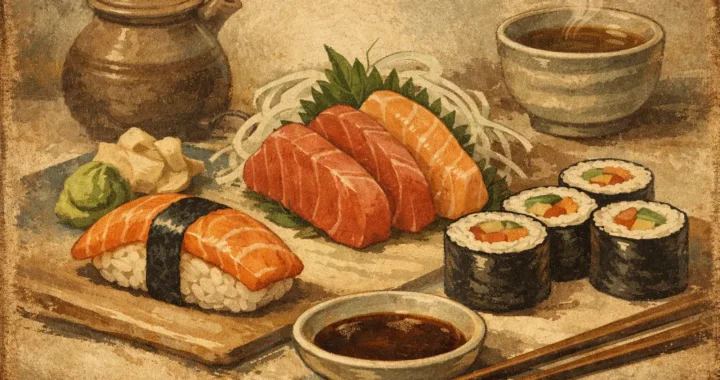
If you have ever looked at a sushi menu and paused at nigiri, sashimi, and maki, you are not alone. A lot of guests ask what is nigiri sashimi and maki before they order, especially if they are trying sushi for the first time or ordering for a group with different tastes.
The short answer is simple. Nigiri is a slice of fish or seafood served over a small hand-pressed bed of rice. Sashimi is sliced raw fish or seafood served without rice. Maki is rolled sushi, usually made with rice, seaweed, and fillings such as fish, crab, cucumber, or avocado. Those three categories may sit near each other on a menu, but they give you very different eating experiences.
What Is Nigiri Sashimi and Maki?
The easiest way to understand these three is to think about rice, shape, and preparation.
Nigiri includes rice. It is usually formed by hand into a compact oval, then topped with a piece of fish, shrimp, or other seafood. Sometimes there is a small dab of wasabi between the rice and topping. Nigiri is often one of the best choices for people who want to taste the fish clearly but still want the balance of seasoned sushi rice.
Sashimi does not include rice. It is simply sliced fish or seafood, prepared to highlight texture, freshness, and clean flavor. Because there is no rice, sauce, or extra filling to soften the experience, sashimi tends to appeal to diners who want the purest version of the ingredient.
Maki is rolled sushi. It is typically made by layering rice and fillings on seaweed, then rolling and slicing it into bite-size pieces. Maki can be very traditional and simple, or it can be more familiar and approachable with cooked ingredients, crunchy textures, or richer sauces. For many beginners, maki feels like the easiest place to start.
Nigiri: Simple, Balanced, and Easy to Understand
Nigiri looks minimal, but there is a lot going on in one piece. You get the soft, lightly seasoned rice, the texture of the topping, and often a small amount of wasabi or brushed sauce. That balance is what makes nigiri so popular.
Common nigiri options include tuna, salmon, yellowtail, shrimp, eel, and egg. Some are raw, while others are cooked. That matters if you are new to sushi or just prefer cooked seafood. Shrimp nigiri and eel nigiri, for example, are often comfortable starting points for people who want to ease into the category.
Nigiri is a good middle ground between sashimi and rolls. It gives you a more direct taste of the fish than maki, but it is usually less intimidating than sashimi because the rice makes it feel more familiar and filling. If you want to learn what different fish taste like without committing to a full sashimi order, nigiri is often the smart move.
There is one trade-off. Because nigiri is so simple, quality and freshness stand out more. If you like layered sauces, crunch, or lots of mixed flavors, maki may be more your speed.
Sashimi: The Purest Way to Taste the Fish
Sashimi is often the category that causes the most confusion because many people use sushi as a catch-all word. But sashimi is not technically sushi in the strictest sense because sushi refers to the seasoned rice. Sashimi skips the rice and focuses entirely on the sliced protein.
You might see salmon sashimi, tuna sashimi, octopus sashimi, or yellowtail sashimi on a menu. The slices are usually served on their own, sometimes with garnish like shredded daikon, wasabi, and soy sauce on the side. The point is not to cover the flavor. The point is to let you taste the ingredient clearly.
For diners who enjoy clean flavors and lighter meals, sashimi can be a great option. It is also a favorite for people following lower-carb eating habits since there is no rice involved. At the same time, it is not always the best first order for a complete beginner. If you are unsure about texture or the idea of raw fish, starting with a cooked maki roll or a piece of nigiri may feel easier.
That does not mean sashimi is only for experts. If you already enjoy fresh seafood and want something straightforward, sashimi can be one of the most satisfying items on the menu.
Maki: The Most Familiar Roll Style
Maki is what many Americans picture first when they think of sushi. It is rolled, sliced, and often easy to share. Because it can include raw fish, cooked seafood, vegetables, tempura-style ingredients, sauces, and different textures, it covers a wide range of preferences.
A simple maki roll might contain tuna or cucumber. A more elaborate roll might include crab, avocado, cream cheese, spicy mayo, eel sauce, or tempura flakes. Some rolls are wrapped with seaweed on the outside, while others are turned inside-out with the rice on the outside.
This variety is exactly why maki is such a common entry point. If someone in your group loves raw tuna, someone else wants cooked shrimp, and another person prefers avocado and cucumber, maki makes it easier for everyone to find something comfortable.
Maki also tends to be a good fit for takeout and casual group meals. It travels well, offers multiple bites per order, and gives people a chance to try several flavors in one sitting. If you are ordering lunch with coworkers or dinner for the family, rolls are often the easiest category to mix and match.
How Nigiri, Sashimi, and Maki Differ on a Menu
When reading a menu, the main difference is not just appearance. It is also how each item is meant to be enjoyed.
Nigiri is usually ordered by the piece or in pairs. It works well when you want to sample specific fish one at a time. Sashimi often comes in several slices of one type of fish or as a chef-selected assortment. It suits diners who want a lighter plate or a focused seafood experience. Maki usually comes as a full roll cut into several pieces, which makes it easy to share or turn into a full meal.
Portion and fullness matter here too. If you are hungry and want something more substantial, maki and nigiri usually feel more filling because of the rice. If you want something lighter or want to pair your order with soup, salad, ramen, or an appetizer, sashimi may fit better.
Which One Should You Order First?
It depends on what sounds comfortable to you.
If you are brand new to sushi, maki is often the safest starting point. The flavors are familiar, the pieces are easy to eat, and there are plenty of cooked or veggie options. If you want to get closer to the taste of the fish without going fully minimalist, choose nigiri. If you already know you like raw seafood and want the cleanest flavor, sashimi is worth ordering.
A lot of diners do best by mixing categories. You might order one roll, a couple pieces of nigiri, and share a sashimi appetizer at the table. That gives you range without overcommitting to one style.
At a casual neighborhood spot, that flexibility matters. Not everyone arrives wanting the same thing, and not everyone has the same comfort level with sushi. A menu that offers beginner-friendly rolls, classic nigiri, and sashimi lets a group order with less guesswork.
A Few Common Misunderstandings
One common misunderstanding is that all sushi is raw fish. It is not. Many maki rolls use cooked ingredients, and some nigiri options are cooked too. Another is that sashimi and sushi are the same word. They are related, but not identical, because sushi includes seasoned rice and sashimi does not.
People also sometimes assume maki is less authentic than nigiri or sashimi. That is not really the right way to think about it. Maki is just a different format. Some rolls are very traditional and simple, while others are more adapted to American dining. Neither is automatically better. It depends on what kind of meal you want.
Ordering With More Confidence
Once you know the basic difference, sushi menus start to feel much easier. Nigiri is fish over rice. Sashimi is sliced fish without rice. Maki is a roll cut into pieces. From there, your choice comes down to flavor, texture, and how adventurous you feel that day.
If you are still unsure, the best approach is not to overthink it. Start with one familiar roll, add a piece or two of nigiri, and branch into sashimi when you want a cleaner, more direct seafood experience. At places like O’Sae Colorado, that mix of options is exactly what helps both beginners and regulars find something they will actually enjoy.
The best sushi order is the one that fits your comfort level now, while leaving room to try something new next time.