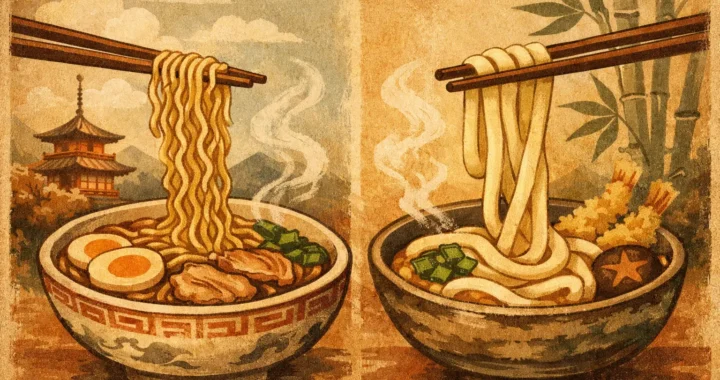
Some noodle choices come down to mood more than hunger. If you are stuck deciding between two hot bowls, ramen versus udon texture is often the real tie-breaker. One gives you spring and bite. The other leans soft, thick, and comforting in a very different way.
That matters more than people think. Broth gets most of the attention, but texture is what you notice with every single bite. If you have ever ordered a bowl and thought, this is good but not what I was craving, the noodle feel was probably the reason.
Ramen versus udon texture at a glance
The shortest answer is simple. Ramen noodles are usually thinner, firmer, and more elastic. Udon noodles are thicker, softer, and chewier in a broader, heavier way.
Ramen has a springy bite that pushes back when you chew. Good ramen noodles feel lively. They hold shape well, and they often have a slight snap at the center if cooked right. That texture comes from the dough itself, especially the use of alkaline salts, which give ramen its distinct firmness and yellowish color.
Udon is a different experience from the first slurp. The noodles are much wider and denser, with a smooth surface and a plush chew. They are less about snap and more about body. When people call udon comforting, they are usually talking about this exact texture as much as the broth.
Neither is better across the board. It depends on whether you want a noodle that feels light and bouncy or one that feels thick, soft, and substantial.
Why ramen feels springy and udon feels plush
A lot of the ramen versus udon texture difference comes down to ingredients and construction. Ramen dough is typically made with wheat flour, water, salt, and kansui, the alkaline ingredient that changes the noodle’s structure. Kansui helps create that firm, slightly chewy texture ramen fans expect. It also keeps the noodles from turning limp too quickly in hot broth.
Udon uses a simpler dough, usually flour, water, and salt. Without the alkaline ingredient, the chew is different. Instead of springiness, you get a smoother and more pillowy bite. Udon can still be chewy, but it is a broad, gentle chew rather than a tight, elastic one.
Thickness changes everything too. Thin noodles naturally eat faster and feel lighter in the mouth. Thick noodles slow things down. They carry more weight, and each bite feels bigger. That is why udon often feels heartier even before you think about toppings.
How the noodle shape changes the whole bowl
Texture is not just about the noodle by itself. It changes how the broth lands, how toppings mix in, and how filling the dish feels.
Ramen’s thinner noodles pick up broth quickly. Every bite tends to bring more liquid with it, which creates a tighter connection between the noodle and the soup. That is one reason ramen can taste so layered. The broth, noodle, and toppings often hit at the same time.
Udon behaves differently. Because the noodles are thicker and smoother, the broth coats them more lightly. You taste the noodle itself more clearly. That can be a plus if you like a clean, straightforward bowl where the texture stands out instead of blending into the broth.
This is also why ramen often feels more energetic, while udon feels calmer and steadier. Ramen has more contrast in each bite. Udon tends to be more even and soothing.
What ramen texture is like when it is done right
A well-cooked ramen noodle should not feel mushy. It should have resistance. When you bite through it, there is a little tension, and then it gives way cleanly. Some people like ramen softer, while others prefer it firmer, but most good ramen lands somewhere in the range of springy and structured.
That structure makes ramen a strong match for rich broths. In tonkotsu, miso, or shoyu styles, the noodle holds its own against bold flavor. If the noodle were too soft, the whole bowl could start to feel heavy. The firmer texture keeps balance.
There is a timing issue with ramen, though. It changes quickly in hot soup. Leave it sitting too long, and the noodles absorb broth and lose some of that bounce. If you like ramen for its texture, it is best enjoyed while it is still fresh and lively.
What udon texture is like when it is done right
Good udon should feel smooth, thick, and satisfying without becoming gluey. The surface is usually slick, but the inside has a dense chew that makes each noodle feel substantial. It is not supposed to snap like ramen. The appeal is that gentle pull and fullness.
Udon works especially well for people who want a noodle they can really notice. The strands are large enough that texture becomes the main event. In a lighter broth, that can be a huge advantage. You get a bowl that feels filling and comforting without needing an especially rich soup.
Udon also tends to stay enjoyable a bit longer in the bowl. It can soften over time too, of course, but the thicker shape gives it more room before it loses its character. For takeout, some diners actually prefer udon for that reason.
Which texture feels heavier
If you are choosing based on how full you want to feel, udon often reads as heavier. The noodles are thicker, and every bite has more mass. Even in a simple broth, udon can feel like a substantial meal.
Ramen can still be rich, especially if the broth is creamy or fatty, but the noodle texture itself is usually lighter. That makes ramen a good pick when you want complexity and comfort without the same dense chew.
This is where personal preference really matters. Some people find ramen easier to keep eating because the bite is smaller and more delicate. Others prefer udon because it feels more grounding and straightforward. Neither reaction is wrong.
Broth matters more than people expect
When people compare ramen and udon, they often treat noodle texture as separate from soup. In practice, they work together.
Ramen is often paired with broths that are layered, savory, and sometimes intense. The noodle’s firmness helps cut through that richness. A softer noodle in the same broth could feel overwhelmed.
Udon is commonly served in broths that are cleaner and lighter, though there are plenty of richer versions too. The noodle’s soft, thick chew brings body to a broth that might otherwise feel delicate. In that setup, udon becomes the comfort piece of the bowl.
So if your craving is really for a stronger soup experience, ramen may make more sense. If you want the noodle itself to be the center of the meal, udon has a strong case.
Ramen versus udon texture for different kinds of diners
If you are new to Japanese noodles, think about familiar textures you already like. If you enjoy pasta with bite, ramen may be the easier starting point. If you like soft, thick noodles or dumpling-style chew, udon may feel more natural.
For families or groups ordering different dishes, texture can be the easiest way to decide. Someone wanting a lighter slurp with more spring will probably be happier with ramen. Someone looking for a softer, more filling comfort bowl may lean udon.
This is especially useful when one table has different comfort levels with Japanese food. You do not need to know every broth style or topping combination to make a good choice. Start with the noodle feel you want.
So which one should you order?
Choose ramen if you want bounce, structure, and a noodle that works closely with the broth. It is a good fit when you want a bowl that feels a little more layered and active.
Choose udon if you want thickness, softness, and a more substantial chew. It is a good fit when you want something calming, filling, and easy to settle into.
At a casual spot with a broad menu like O’Sae Colorado, that difference can help a lot when you are ordering for mixed cravings. Maybe one person wants sushi, another wants a rice bowl, and you are deciding between noodle soups. In that moment, texture is often the clearest answer.
The next time you are choosing between the two, skip the idea that one is more authentic or more popular. Ask a simpler question instead: do you want springy bite or thick comfort? That answer usually gets you to the right bowl.