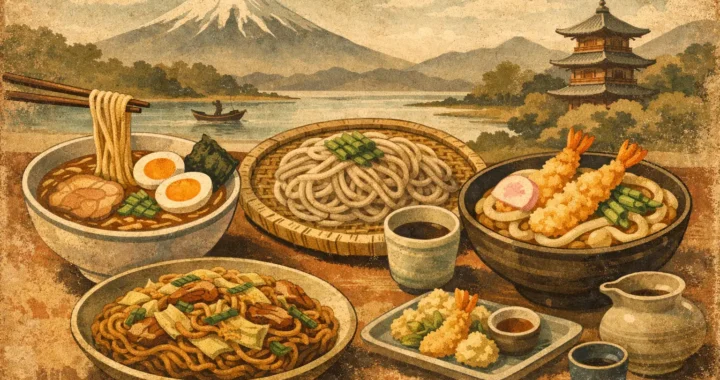
If you have ever looked at a Japanese menu and paused at the noodle section, you are not alone. This guide to Japanese noodle dishes is built for that moment when you want something comforting and satisfying, but you also want to know what you are actually ordering.
Japanese noodle dishes cover a wide range of textures, broths, and flavors. Some are light and clean. Some are rich and filling. Some come in soup, while others are stir-fried or served chilled. Once you know the basics, choosing gets much easier, whether you are trying something new for lunch, ordering takeout for dinner, or picking a dish that works for the whole table.
A simple guide to Japanese noodle dishes
The easiest way to understand Japanese noodle dishes is to start with the noodles themselves. In many cases, the noodle type tells you a lot about the dish before you even get to the broth or toppings.
Ramen is probably the best-known option for many American diners. These noodles are usually thin to medium in thickness, springy, and made with wheat. They are most often served in a hot broth with toppings like sliced pork, green onion, soft-boiled egg, bamboo shoots, or seaweed. If you want a bowl that feels hearty and full of flavor, ramen is usually the first place to look.
Udon is very different. The noodles are thick, soft, and chewy, with a smooth texture that makes them especially satisfying in broth. Udon dishes tend to feel a little simpler at first bite, but that is part of the appeal. The noodles themselves are the star, and they pair well with mild broths, tempura, or simple proteins.
Soba noodles are thinner and usually made with buckwheat, though many versions also contain wheat flour. They have a slightly earthier taste than ramen or udon. Soba can be served hot in broth or cold with dipping sauce, and the cold version is especially good if you want something lighter.
Yakisoba is a bit of an outlier because it is not usually served in broth. It is a stir-fried noodle dish, often cooked with vegetables and protein in a savory, slightly sweet sauce. Despite the name, yakisoba is typically made with wheat noodles rather than buckwheat soba. If you want noodles without the soup, this is one of the most familiar and approachable choices.
Ramen: the bowl most people start with
When people think of Japanese noodles, they usually picture ramen first, and that makes sense. Ramen is flexible, filling, and easy to customize by taste.
What changes most from one ramen bowl to another is the broth. Tonkotsu broth is rich and creamy, made by simmering pork bones for a long time. It is a strong choice if you want something deep, savory, and comforting. Shoyu ramen uses a soy sauce-based broth, which tends to be lighter and saltier. Miso ramen has a fuller, slightly sweet and nutty flavor. Shio ramen is usually the lightest, built around salt and a cleaner broth profile.
Toppings matter too, but not all toppings change the bowl in the same way. Chashu pork adds richness. A soft-boiled egg brings creaminess. Corn and butter can make a bowl feel sweeter and heavier. Green onions and bean sprouts keep things fresher. If you are new to ramen, a balanced bowl with pork, egg, and scallions is often the safest starting point.
The trade-off with ramen is that richness can be a lot if you are not in the mood for a heavy meal. For some people, that is exactly the point. For others, udon or soba may be a better fit.
Udon: thick noodles, simple comfort
Udon is a good choice when you want comfort without as much intensity. The thick noodles have a soft chew that makes the dish feel substantial even when the broth is mild.
A classic udon bowl often comes in a clear, savory broth made with dashi, soy sauce, and mirin. That creates a gentler flavor than many ramen broths. You still get warmth and depth, but the overall dish tends to feel cleaner and less heavy.
Udon also works well with toppings that add texture. Tempura udon is a common favorite because the crisp coating contrasts with the soft noodles and warm broth. Beef udon is another popular option for diners who want a little more richness without going all the way into ramen territory.
If you are ordering for a mixed group, udon is often one of the easiest noodle dishes to recommend. It is familiar enough for beginners, mild enough for people who do not want anything too bold, and filling enough to count as a real meal.
Soba: lighter, earthier, and more flexible than it looks
Soba does not always get the same attention as ramen, but it deserves a place in any guide to Japanese noodle dishes. It is one of the best choices when you want noodles that feel a little lighter and less rich.
Hot soba is comforting and straightforward, often served in a seasoned broth with simple toppings. Cold soba, on the other hand, is especially useful in warmer weather or when you want something that feels refreshing rather than heavy. The noodles are usually served plain or lightly garnished, with a dipping sauce on the side.
That cold presentation can surprise first-time diners, but it is worth trying. The flavor of the noodle comes through more clearly, and the texture stays firmer. If you tend to prefer cleaner flavors over creamy or fatty ones, soba may end up being your favorite.
One thing to keep in mind is that buckwheat has a distinct taste. Some people love that earthy note right away. Others need a bowl or two to warm up to it. If you are unsure, try soba in a simple hot broth first.
Yakisoba and other noodle dishes without broth
Not every Japanese noodle dish arrives in a soup bowl. Yakisoba is one of the most popular dry-style options, and it is easy to see why. It is savory, a little sweet, and built around stir-fried noodles, cabbage, onions, and a protein like chicken, beef, pork, or shrimp.
For many diners, yakisoba feels more familiar than broth-based noodle dishes because it lands closer to other stir-fried noodle meals they may already know. It also travels well for takeout, since the noodles hold up better than soup on a short ride home.
There are other variations too, including noodle dishes that lean spicy, dishes topped with extra sauce, or versions paired with fried items. These can be great choices when you want something filling and flavorful but not quite as slurp-forward as ramen or udon.
How to choose the right noodle dish for your mood
The best order depends less on what is most traditional and more on what sounds good right now. If you want a rich, cozy meal, ramen is usually the right move. If you want something soft, mild, and filling, go with udon. If you want lighter flavor and a slightly firmer bite, soba makes sense. If you are skipping broth altogether, yakisoba is an easy yes.
Temperature matters too. On a cold day, hot ramen or udon can be exactly what you want. On a warm afternoon, cold soba may hit better. If you are eating quickly on a lunch break, a simpler bowl can be more practical than a very rich one.
Toppings also help narrow it down. Pork and egg usually push a bowl toward hearty comfort. Tempura adds crunch but can make the meal feel heavier. Green onions, seaweed, and lighter proteins keep things more balanced.
At a casual neighborhood spot with a broad menu, including places like O’Sae Colorado, noodle dishes can also solve a group-order problem. One person can get ramen, another can go for udon, and someone else can stick with sushi or a rice bowl without forcing everybody into the same lane.
What beginners should order first
If you are brand new to Japanese noodles, start with the most approachable version rather than the most famous or the most traditional. That usually means a straightforward ramen, a classic udon, or a well-balanced yakisoba.
A good first ramen should have recognizable toppings and a broth that is flavorful but not overwhelming. A basic udon bowl is ideal if you care more about texture and comfort than strong seasoning. Yakisoba works well if you know you like stir-fried noodles and want something easy to read on the plate.
Soba can still be a great first choice, but it depends on your taste. If you already enjoy earthy grains or lighter meals, go for it. If not, you might appreciate it more after trying ramen or udon first.
The easiest rule is this: do not order by popularity alone. Order by texture, broth style, and how hungry you are.
Japanese noodle dishes are popular for a reason. They can be quick, comforting, affordable, and varied enough to fit a lot of different tastes. Once you know the difference between ramen, udon, soba, and yakisoba, the noodle section stops feeling complicated and starts feeling useful. The next time you are deciding what to order, pick the bowl or plate that matches your mood and let that be the right choice.