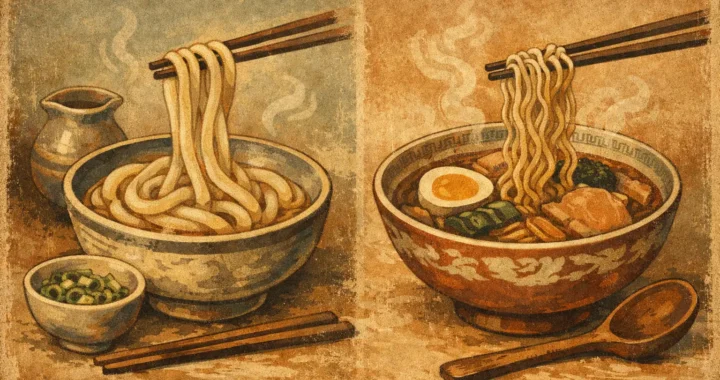
Some days you want a bowl that feels thick, warm, and simple. Other days you want something with more chew, more spring, and a broth that leans richer. That is really what the udon vs ramen noodles question comes down to. Both are comforting, both are popular, and both can absolutely hit the spot. But they eat very differently.
If you have ever looked at a menu and paused between the two, you are not alone. For a lot of guests, especially if you are newer to Japanese food, udon and ramen can sound close enough that the choice feels random. It does not have to be. Once you know how the noodles are made, how they feel in the bowl, and what kinds of broth usually go with them, picking one gets much easier.
Udon vs ramen noodles at a glance
The fastest way to separate udon from ramen is texture. Udon noodles are thick, soft, and smooth. Ramen noodles are thinner, springier, and usually have more bite. Even before broth or toppings enter the picture, the noodle itself changes the whole meal.
Udon is typically made from wheat flour, water, and salt. Ramen is also wheat-based, but it usually includes kansui, an alkaline ingredient that gives ramen noodles their firm texture and slight yellow color. That one difference matters a lot. It is why ramen tends to feel bouncier and more structured, while udon feels plush and substantial.
If you are ordering based on comfort alone, udon often feels calmer and heavier in a good way. Ramen usually feels more layered and dynamic, especially when the broth is rich and the toppings are varied.
What udon noodles are like
Udon is known for its thickness. These noodles are broad, rounded, and noticeably larger than ramen noodles. When cooked well, they are tender but still have some chew. The texture is smooth enough that they almost glide, which is part of why udon works so well in both hot soups and stir-fried dishes.
Flavor-wise, udon noodles themselves are fairly neutral. They are there to carry broth, sauce, and toppings rather than bring a strong taste on their own. That makes them a good choice for people who want a bowl that feels straightforward and easy to enjoy.
Udon broth is often lighter and cleaner than ramen broth, though that depends on the dish. Many udon soups lean on dashi, soy sauce, and a mild savory profile. The result is comforting without feeling too heavy. If you like soups that taste balanced rather than intense, udon usually lands well.
This is also why udon can be a solid pick for beginners. The noodle is easy to like, the broth is often less aggressive, and the whole bowl tends to feel familiar even if you do not order Japanese food often.
What ramen noodles are like
Ramen noodles are thinner and more elastic. They have that signature bounce when you bite into them, and they hold up well in richer broths. Because of kansui, ramen noodles have a different structure from udon. They are not just thinner versions of the same thing. They are built for a different eating experience.
Ramen broth is where a lot of people fall in love with the dish. Depending on the style, it can be creamy, deeply savory, salty, garlicky, or layered with pork, chicken, miso, or soy-based flavor. The noodle and broth work together, so ramen often feels more complex from the first bite.
That complexity is great if you want a bowl with more personality. It can also be a little more specific. Some guests want that rich, concentrated flavor. Others want something simpler and cleaner. Neither is better. It really depends on your mood.
Ramen also tends to come with toppings that make the bowl feel more built out, like sliced pork, soft-boiled egg, green onion, bamboo shoots, seaweed, or corn. Udon can have toppings too, of course, but ramen often leans more into variety within one bowl.
Udon vs ramen noodles in broth, bite, and fullness
When people ask about udon vs ramen noodles, they are usually asking about more than noodle shape. They want to know how the whole meal feels.
In terms of bite, ramen wins on firmness and spring. Udon wins on softness and thickness. If you like noodles that fight back a little, ramen is probably your move. If you want noodles that feel hearty and smooth, udon makes more sense.
In terms of broth, ramen usually brings stronger flavor. Tonkotsu ramen is rich and creamy. Miso ramen can be savory and bold. Shoyu ramen is lighter than tonkotsu but still layered. Udon broth often feels cleaner, with a lighter savory base that lets the noodle stand out.
In terms of fullness, both can be satisfying, just in different ways. Udon feels filling because the noodles are thick and substantial. Ramen feels filling because the broth, noodles, and toppings can add up to a richer bowl overall. If you are very hungry, either can work. The better question is whether you want weight from the noodle or depth from the broth.
Which one is better for beginners?
If you are newer to Japanese noodles, udon is often the easier entry point. The texture is simple to understand, and the broth is usually less intense. It is the kind of dish that rarely surprises you in a bad way.
That said, ramen is also beginner-friendly when you know what you are getting. If you already like rich soups, noodle bowls, or layered savory flavors, ramen may be the one that clicks faster. A lighter ramen can feel approachable, while a heavier one can be exactly what someone wants on a cold day.
For families or groups, this is where variety helps. One person may want the clean comfort of udon, while another wants the bolder flavor of ramen. That is a pretty common split, especially when everyone has a different comfort level with Japanese food.
When to order udon
Udon makes sense when you want comfort without a lot of fuss. It is a good lunch choice if you want something warm and satisfying that does not feel too heavy. It is also a strong option when you are in the mood for noodles but not necessarily a rich broth.
It can be especially appealing if texture is your deciding factor. Some people simply prefer thicker noodles. If that is you, ramen is probably not going to replace udon no matter how good the broth is.
Udon also pairs well with a broader meal. If you are ordering a mix of items for the table, a bowl of udon can sit nicely alongside sushi, appetizers, or rice dishes without competing too hard for attention.
When to order ramen
Ramen is the move when you want a bowl with more intensity. If you are craving something rich, savory, and a little more layered, ramen usually delivers that better than udon.
It is also a great cold-weather pick. A hot bowl of ramen with a flavorful broth and hearty toppings can feel like the whole meal is built around comfort. For plenty of guests, that is exactly the point.
Ramen can also be better if you want more variation in each bite. Between the noodles, broth, proteins, egg, and vegetables, the bowl often changes as you eat. Some people love that. Others would rather have a more even, straightforward experience. Again, it depends.
Common mix-ups to avoid
One easy mistake is assuming udon is just thicker ramen. It is not. The ingredients, texture, and role in the dish are different enough that the comparison only goes so far.
Another mistake is judging only by broth photos. A rich-looking bowl may tempt you, but if you dislike springy noodles, ramen may still not be your favorite. On the flip side, if you like a firmer bite, udon can feel too soft no matter how good the broth is.
The smarter move is to think about what you usually enjoy in pasta, soup, or noodle dishes. If you like chewy noodles and deeper broth, start with ramen. If you like soft, thick noodles and cleaner flavors, start with udon.
At a place like O’Sae Colorado, where different cravings can share the same table, that choice does not have to be complicated. Pick the bowl that matches your mood, not the one you think you are supposed to order.
So which should you choose?
Choose udon if texture matters most and you want a thicker, smoother noodle with a lighter soup profile. Choose ramen if you want more bounce in the noodle and more depth in the broth. If you are torn, think less about authenticity debates and more about what sounds good right now.
That is the nice thing about noodle bowls. They do not ask for a perfect answer. They just ask what kind of comfort you want today.