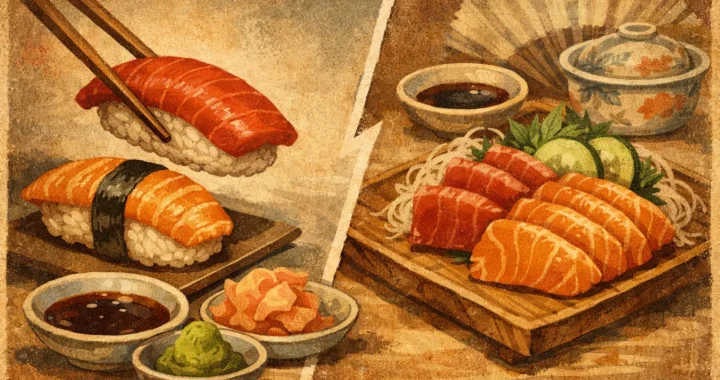
You’re looking at a sushi menu, you know you want the one with rice – but then you pause. If you’ve ever searched how to remember nigiri vs sashimi right before ordering, you’re not alone. It’s one of the most common beginner sushi mix-ups, and the fix is actually simple once you connect each word to what’s on the plate.
How to remember nigiri vs sashimi at a glance
The fastest way to remember it is this: nigiri includes rice, sashimi does not. That’s the core difference, and for most people, that one detail clears up 90 percent of the confusion.
Nigiri is usually a small hand-formed mound of vinegared sushi rice with a slice of fish or seafood placed on top. Sashimi is just the sliced fish or seafood by itself. No rice underneath. No roll around it. Just clean slices, usually served with soy sauce, wasabi, ginger, or simple garnish.
If you remember nothing else, remember this sentence: nigiri needs rice, sashimi stands alone.
Why people mix them up
The confusion makes sense. Both are common on sushi menus, both often feature the same fish, and both can look similar at first glance if you’re not used to Japanese dining terms.
If you see salmon nigiri and salmon sashimi on the same menu, the fish is the same type, but the format changes. One comes over rice. One comes by itself. That’s why the names can blur together for newer diners. The ingredient may match, but the dish is not the same.
There’s also the fact that many people use “sushi” as a catch-all term for everything at a sushi restaurant. In casual conversation, that happens all the time. But on the menu, the distinction matters because it changes the portion, texture, and how filling the dish feels.
A simple memory trick that actually sticks
If you want an easy way to lock it in, use the rice test.
Ask yourself: is there rice? If yes, it can be nigiri. If no, it’s sashimi.
That works because sashimi is the simpler format. It strips things back to the protein itself. Nigiri adds the rice base, which changes the bite and makes it feel more like what many people think of as classic sushi.
Another useful trick is to think of nigiri as a two-part bite and sashimi as a one-part slice. Nigiri is rice plus topping. Sashimi is just the topping.
You do not need to memorize Japanese language roots to get this right in a restaurant. A practical visual cue is often better than a technical explanation, especially if you’re ordering fast or helping someone else at the table choose.
What nigiri looks and feels like
Nigiri is usually served in pairs. Each piece has an oval-shaped mound of sushi rice with a slice of fish, shrimp, or another topping draped over it. Sometimes there’s a small touch of wasabi between the rice and the fish. Sometimes the topping is lightly seared or brushed with sauce.
The key thing is balance. With nigiri, you’re tasting both the fish and the seasoned rice together in one bite. That combination gives it a softer, fuller feel than sashimi. It can also be a good entry point for people who want to try raw fish but prefer something a little more familiar and filling.
For beginners, nigiri often feels less intimidating than sashimi because the rice makes the dish feel more structured and approachable. If you already enjoy rolls but want to branch out, nigiri is often the natural next step.
What sashimi looks and feels like
Sashimi is all about the sliced fish or seafood itself. It’s typically plated in clean slices, often with garnish like shredded daikon, ginger, or wasabi on the side. Since there’s no rice, the flavor and texture of the protein stand out more.
That’s why sashimi is often a favorite for more experienced sushi diners, but it’s not only for experts. If you know you like salmon, tuna, or yellowtail and want a cleaner, lighter dish, sashimi can be a great choice.
It also tends to feel less filling than nigiri because you’re skipping the rice. That can be a plus or a minus depending on what you want. If you’re ordering lunch and want something lighter, sashimi may be exactly right. If you’re hungry and want a more complete meal, nigiri or a mix of items may make more sense.
How to remember nigiri vs sashimi when ordering
When you’re scanning a menu, don’t overthink the names. Focus on format first.
If you want rice with your fish, look under nigiri. If you want slices of fish by themselves, look under sashimi. That small mindset shift makes the menu easier to read.
It also helps to think about appetite. Nigiri gives you rice and protein together, so it usually feels more substantial. Sashimi is lighter and more direct. Neither is better across the board – it depends on whether you want a snack, a tasting experience, or a meal that keeps you full longer.
For a lot of first-time diners, the easiest move is to order one or two pieces of nigiri alongside a roll or another familiar item. That way you get to compare formats without committing your whole meal to something new. If you already know you like raw fish and want less rice, sashimi is an easy step up.
The biggest mistake beginners make
The most common mistake is assuming sashimi is a type of sushi roll or that nigiri is the same thing as any raw fish dish. They overlap in ingredients, but not in form.
Another mistake is ordering based only on the fish type without noticing the section of the menu. Tuna nigiri and tuna sashimi are not interchangeable orders. One gives you composed bites with rice. The other gives you pure slices. If you expected one and received the other, it can feel confusing even though the menu was technically clear.
This is why menu labels matter, especially at a casual restaurant where one table may have total beginners and longtime sushi fans ordering together. Knowing the difference keeps your order closer to what you actually want.
Which one should you choose?
If you want a quick answer, choose nigiri if you like balance and sashimi if you like simplicity.
Nigiri is often the better pick for someone easing into sushi. The rice softens the experience, makes each bite more filling, and can feel closer to the sushi most Americans recognize. Sashimi is better if you want to focus on the fish itself, skip the rice, or build a lighter meal.
There are trade-offs. Nigiri can be more approachable, but the rice also changes the flavor and texture profile. Sashimi gives you a cleaner taste of the fish, but it may feel too minimal for someone who wants a heartier lunch or dinner. It really depends on your comfort level and what else you’re ordering.
At a place like O’Sae Colorado, where the menu includes options for both beginners and regular sushi diners, it makes sense to mix formats if you’re unsure. A couple pieces of nigiri plus a roll, soup, or appetizer can be an easy way to try more than one style without making the meal feel complicated.
One last way to make it stick
Picture the plate before you order.
If you see fish on rice, that’s nigiri. If you see sliced fish by itself, that’s sashimi. Visual memory is usually stronger than word memory, especially with food terms you don’t use every day.
That’s also why many people remember the difference permanently after ordering both once. As soon as they see the side-by-side contrast, the terms stop feeling abstract. One has a base. One doesn’t.
If you’re still second-guessing yourself, use the shortest possible version: nigiri = rice, sashimi = no rice. That’s enough to order confidently, ask better questions, and try something new without feeling like you need a sushi glossary first.
The next time you’re staring at the menu for an extra 20 seconds, you won’t need to guess – just look for the rice and let that make the decision easier.